Flat and low-slope roofs present a specific challenge: water needs somewhere to go, and seams are where most leaks begin. Spray polyurethane foam roofing addresses both issues at once.
Spray foam roofing is a fluid-applied system in which liquid components are sprayed onto an existing roof deck, expanding into a seamless layer of closed-cell foam that provides both insulation and waterproofing, then protected with an elastomeric coating. The result adds minimal weight to the structure while filling gaps, sealing around penetrations, and creating positive slope in areas that previously held standing water.
With more than 35 years of experience in the field, Specialty Roofing of CA has seen how the system performs across commercial buildings and residential properties throughout California. This guide covers what the material is, how installation works, what affects pricing, and the maintenance schedule that keeps a foam roof performing for decades.
Key Takeaways
- Spray foam creates a seamless, fully adhered surface that insulates and waterproofs in a single application.
- The material expands on contact, sealing penetrations and correcting drainage problems on flat roofs.
- Periodic recoating and routine inspections are what extend the service life of a foam roof.
How The Roofing System Works
A spray foam roof is built on site from two liquid chemicals that expand into a seamless insulating layer, then sealed with a reflective coating. That combination handles waterproofing, insulation, and drainage correction in a single assembly.
Core Components And Foam Chemistry
Spray polyurethane foam starts as two separate liquids, stored in heated drums and pumped through a proportioner at roughly a 1:1 ratio.
- Side A — isocyanate
- Side B — a resin blend containing polyols, catalysts, blowing agents, flame retardants, and surfactants
The two streams mix at the spray gun tip and react on contact with the deck. Within seconds the material expands about 30 times its liquid volume and cures tack-free.
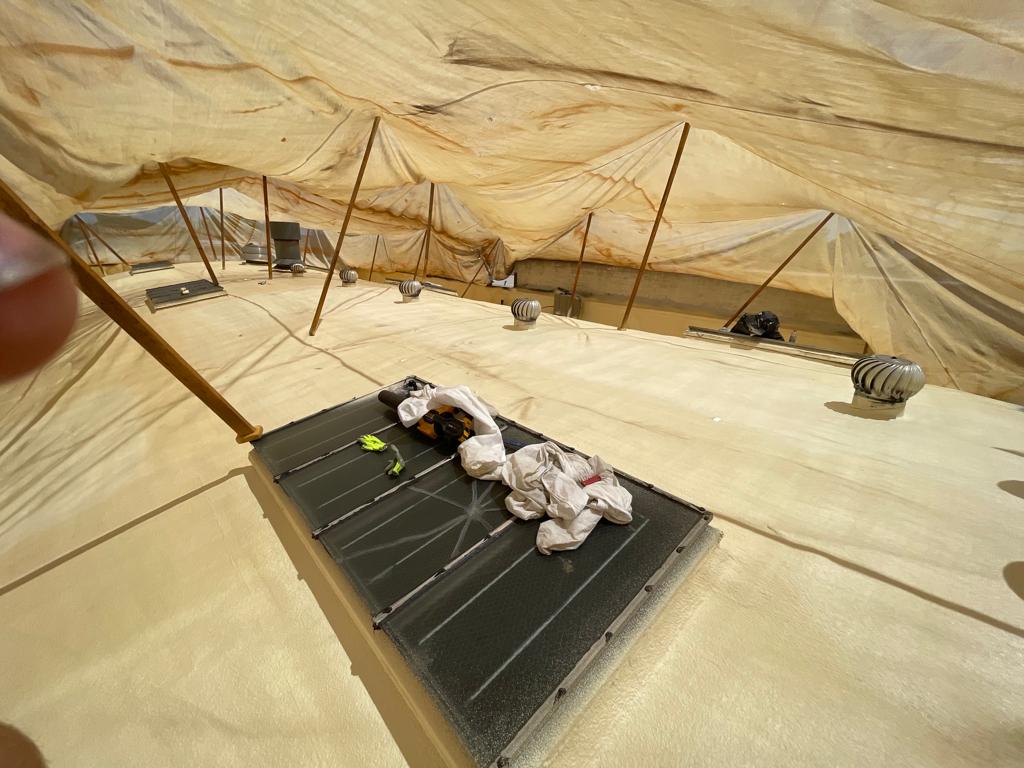
Roofing-grade foam is closed-cell at approximately 2.8 to 3 lb/ft³ density, which is denser than the open-cell foam used in attics. Closed cells resist water absorption and support foot traffic.
The foam is then coated with silicone, acrylic, or polyurethane at 20–30 dry mils. That coating carries the UV protection, since uncoated foam degrades in sunlight.
Benefits For Buildings And Roof Decks
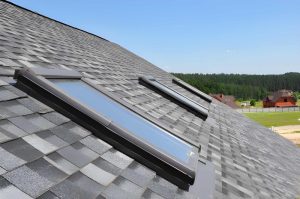
Because the foam is sprayed as a liquid, it bonds directly to the existing substrate and self-flashes around curbs, pipe penetrations, skylights, and parapet walls. There are no seams or fasteners at those transitions, which is where most flat roof leaks begin.
Thickness can be varied across the roof surface to build slope toward drains and eliminate standing water.
| Property | Typical Performance |
|---|---|
| R-value | ~6.5 per inch |
| Weight added | 0.5 lb/ft² at 1 inch |
| Adhesion | Bonds to concrete, metal, wood, BUR, single-ply |
| Recoat interval | 10–15 years |
Most SPF installations go directly over the existing roof, avoiding tear-off costs and landfill disposal. The low added weight keeps the assembly within the load limits of most decks.
Planning Installation And Long-Term Care
A successful spray polyurethane foam roof depends on two things: an accurate assessment of the existing deck before spraying begins, and a maintenance schedule that keeps the coating intact afterward.
Suitability, Preparation, And Application
SPF works best on low-slope commercial and residential decks with positive drainage. It can be applied directly over concrete, metal, wood, and existing single-ply or built-up roofs, which often eliminates the cost and disruption of a tear-off.
Preparation determines adhesion. Crews test for moisture, remove gravel and loose material, cut out saturated insulation, power wash the surface, and let it dry completely.
Application follows in passes, typically 1 to 1.5 inches per lift, until the specified thickness is reached — commonly 1 to 3 inches, yielding roughly R-6.5 per inch.
Weather limits matter:
- Substrate temperature: generally above 50°F
- Wind: under 15 mph to prevent overspray
- Moisture: no dew, frost, or standing water
The base coat of elastomeric coating is usually applied the same day the foam is sprayed.
Inspections, Repairs, And Protective Coatings
Foam itself does not resist UV exposure, so the acrylic or silicone topcoat is what carries the system. Plan on inspections twice a year, plus a check after hail or high winds.
Inspectors look for coating erosion, pinholes, blisters, punctures from foot traffic or dropped tools, and thinning at parapets and penetrations. Small breaches are repaired by cutting out wet foam, refilling, and re-coating the patch — usually a same-day fix.
Recoating is the main long-term expense. Most systems need a fresh coat of 20 to 30 mils every 10 to 15 years, depending on the original mil thickness and climate.
Kept on that schedule, an SPF roof can remain serviceable for 30 years or more. Skipping recoats allows UV degradation to reach the foam, which is far costlier to correct.