
Single-Ply Roof Membrane System
Durable, Energy-Efficient Commercial Systems in the San Joaquin Valley.
Get a Free Quote
Success Stories From Those Who Know Us Best
EXCELLENT Based on 25 reviews
 Posted on Google
 Mary RaymondAs new property owners outside of the state, we had to fit in a new roof in a limited timeline. They managed to squeeze us in, and I couldn't be happier with the results. They also re-roofed the small accessory building that serves as an outdoor storage room. I chose the 'birchwood' color for tiles, despite the house being white, and it looks awesome! Also, a big plus for me was Donovan's prompt communication - very responsive and on top of things. I felt that the cost was very reasonable. I very highly recommend them.Posted on Google
 Matt OrpinCalled with a question and Don picked up immediately and was very friendly and understanding. Would suggest ⭐⭐⭐⭐⭐Posted on Google
 Raphael JardimVery responsive and knowledgeable professionals. I highly recommend it.Posted on Google
 Paulo AcobaWe had a handful of leaks after that excessive rainfall and Donovan and his crew worked with our schedule to get them fixed ASAP. Specialty Roofing was reliable, did a quality job, were knowledgeable, and delivered the work with A1 customer service. Don't hesitate giving them a call!Posted on Google
 Jon StarkeyWe had a couple challenges, however Donavon took care of them without issue, I highly recommendPosted on Google
 Sandra HayThey came right out to so an inspection and provide an estimate. Work was done quickly and everything was cleaned up afterwards. Very responsive to questions with quick conversation replies.Posted on Google
 Chris BruynzeelAmazing company! So pleased with the work they did on our roof a couple months ago. Fast, respectful, courteous, excellent work. Can’t recommend them highly enough.Posted on Google
 Dave JohnsonThese guys are pros pros,definitely a 10/10 definitely recommend-billPosted on Google
 albert madkinsSpecialty roofing was great. Work with me and my insurance company I had multiple problems that I needed to have taken care of and Donovan . So if you're looking for a good honest reliable roofing company specialty roofing is it!Posted on Google
 Melodi BuschAppreciated the time spent on roof as well as the problem with my gutters.
A TPO single-ply membrane is a heat-reflective thermoplastic sheet that is mechanically fastened or fully adhered to a flat or low-slope roof, with seams heat-welded to form a continuous, watertight surface. For property owners across the San Joaquin Valley, that combination handles long stretches of triple-digit summer heat, winter tule fog, and the occasional heavy rain without the maintenance demands of older built-up systems.
The white membrane surface reflects a large share of solar radiation instead of absorbing it, which reduces rooftop temperatures and cooling loads during Valley summers. Most commercial buildings see meaningful reductions in air conditioning costs, and the lighter thermal load also slows deterioration of the membrane and insulation below it.
At Specialty Roofing of CA, we have installed single-ply systems on warehouses, retail buildings, apartment complexes, and residential patio covers throughout the region for more than three decades. Below, we cover how TPO compares to other flat roofing options, thickness and attachment choices, what installation involves, and how to tell whether your existing roof is a candidate for recover or full replacement.
TPO Performance for San Joaquin Valley Properties
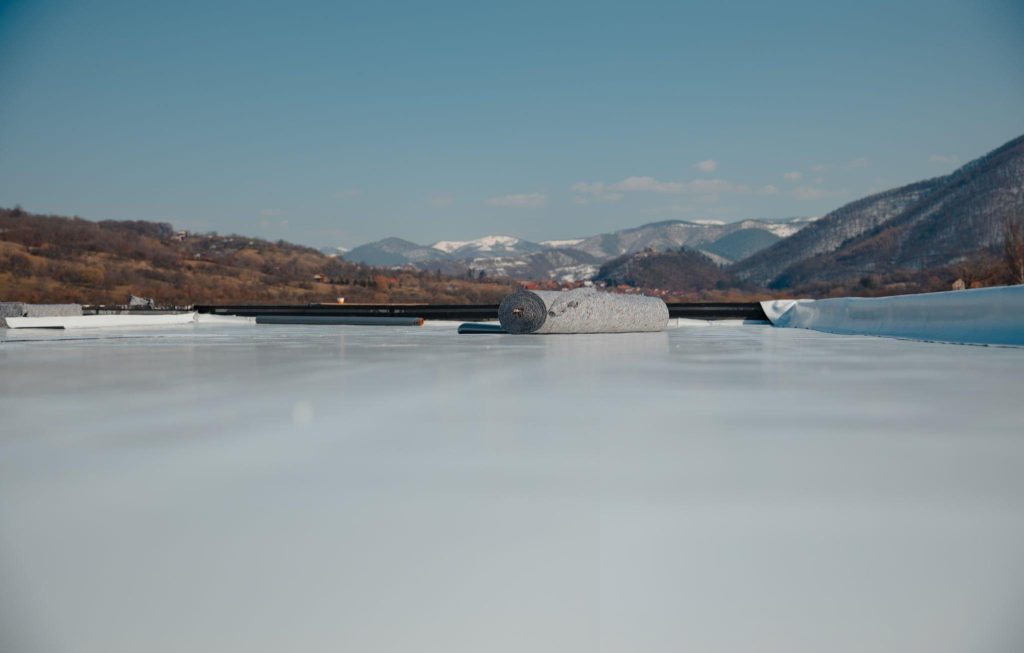
TPO membrane handles two conditions that define roofing here: prolonged summer heat above 100°F and the temperature swings between valley fog season and July. Its reflective white surface lowers rooftop temperatures, while heat-welded seams keep water out during winter storms.
Heat Reflectivity and Energy Efficiency
Standard white TPO carries an initial solar reflectance around 0.79 and thermal emittance near 0.86, which means most of the sun’s energy leaves the roof rather than moving into the building.
That matters in Fresno, Modesto, Stockton, and Bakersfield, where cooling loads run from May through September. A dark, absorptive roof surface can reach 160°F or more on a summer afternoon. A reflective TPO surface typically runs 50 to 60 degrees cooler under the same conditions.
The practical results we see on completed projects:
- Reduced HVAC runtime during peak afternoon demand hours
- Lower deck and insulation temperatures, which slows thermal aging of the assembly
- Title 24 compliance for low-slope roofs, since most TPO products meet California's cool roof requirements
- Potential utility rebates through PG&E and SCE cool roof programs
Reflectivity does decline after weathering and dirt accumulation. Periodic rinsing recovers a meaningful portion of the original value.
Weather Resistance and Durability
TPO seams are hot-air welded, not glued. The weld fuses adjacent sheets into a single mass of material, and a properly executed seam is generally stronger than the membrane itself.
That construction holds up to valley conditions:
| Condition | How TPO Responds |
|---|---|
| Summer UV exposure | Formulated with UV stabilizers; resists surface chalking and cracking |
| Winter rain and ponding | Welded seams and flashings remain watertight |
| Temperature cycling | Flexible without plasticizers, so it does not become brittle with age |
| Agricultural and industrial exposure | Resists many chemicals, algae, and fungal growth |
Membrane thickness drives service life. We specify 60-mil for most commercial applications and 80-mil where foot traffic, equipment service access, or hail exposure is a factor.
Typical service expectancy runs 20 to 30 years when the system is installed to manufacturer specification and inspected regularly. Details around penetrations, skylights, drains, and curbs are where roofs usually fail first, so we weld and reinforce those areas rather than rely on sealant alone.
Professional Installation and Roof Planning
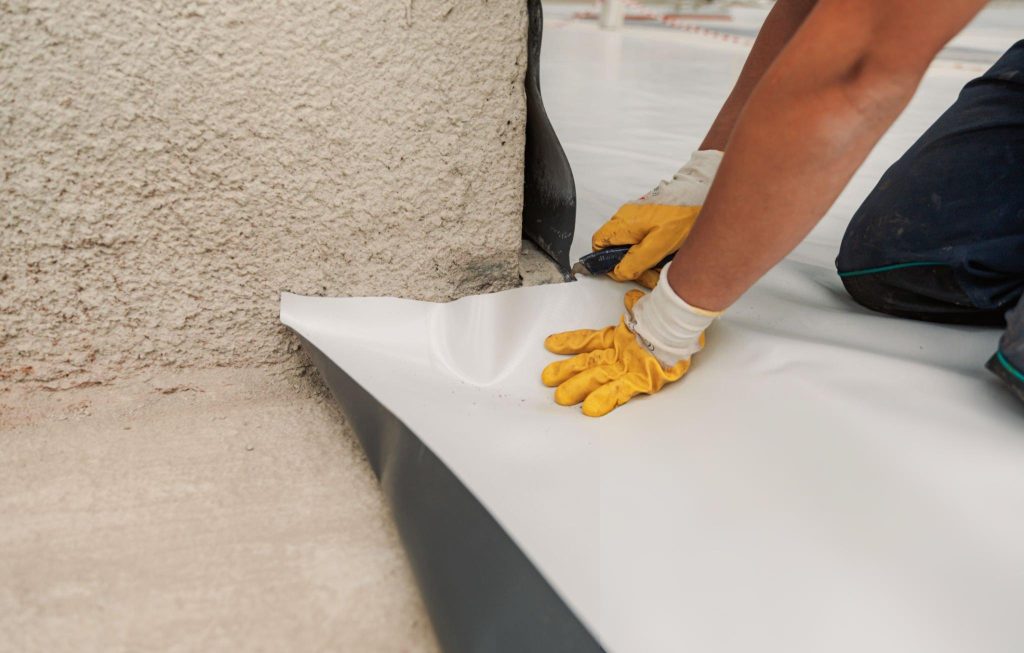
A TPO membrane performs only as well as the assembly beneath it and the workmanship holding it together. Our process starts with a documented roof evaluation, moves through system and attachment decisions, and continues with scheduled inspections after the final weld.
Roof Assessment and System Selection
We begin with a core cut and moisture survey to confirm what is already on the deck. Saturated insulation, deteriorated fasteners, and failing metal edges all change the scope before a single roll is unwrapped.
From there, we document slope, drain locations, penetration counts, and rooftop traffic patterns. In the San Joaquin Valley, high summer heat and heavy UV exposure make membrane thickness and reflectivity practical decisions, not cosmetic ones.
Key specification choices we review with you:
| Decision | Options We Discuss |
|---|---|
| Membrane thickness | 45, 60, or 80 mil |
| Attachment | Mechanically fastened, fully adhered, or self-adhered |
| Insulation | Polyiso R-value and tapered layouts for drainage |
| Cover board | Added under high-traffic or hail-prone areas |
Tear-off versus recover is settled by moisture readings and deck condition, not assumption. We also verify that the substrate is smooth and dry before insulation goes down, since voids and ridges telegraph through the finished membrane.
Maintenance and Long-Term Protection
Heat-welded seams are the strongest part of a TPO roof, but the details around them need attention. We probe every seam during installation and photograph flashings at curbs, pipes, and skylights for your records.
After completion, we recommend inspections twice a year, plus a check after any significant storm or rooftop equipment work.
Routine items we address:
- Clearing drains, scuppers, and gutters of valley dust and debris
- Resealing pitch pockets and termination bar caulk before it splits
- Repairing punctures from HVAC service, foot traffic, or dropped tools
- Confirming that walkway pads still protect service routes
Ponding water, blistered seams, and exposed scrim are the signs we watch for most closely. Addressed early, these are small repairs; ignored, they let water into the insulation and shorten the life of the entire assembly.
Step-by-Step to Achieving Your Roofing Goals
At Specialty Roofing of CA in San Joaquin Valley, CA, we make the roofing process simple, efficient, and stress-free.
Free Consultation & Inspection
A thorough assessment of your roof and space to determine the ideal skylight placement and installation solution.
Personalized Estimate
A clear, tailored estimate based on your skylight selection, roof requirements, and installation needs.
Convenient Scheduling
Flexible scheduling that makes it easy to plan your skylight installation around your availability.
Expert Installation
Professional skylight installation focused on proper placement, secure fitting, and reliable roof protection.
Final Inspection & Cleanup
A careful inspection of the completed installation followed by a thorough cleanup, leaving your space bright, clean, and ready to enjoy.
Areas We Serve
Specialty Roofing Free Quote Request
Please provide us with your contact information, and some details about your project. We can then provide your free quote. There is no obligation, and we do not believe in high-pressure sales tactics. We will NOT sell or rent the information you provide.
If this is an emergency, please call (209) 777-0875
Frequently Asked Question
TPO membrane roofing raises consistent questions about material composition, service life, pricing, and thickness selection. Below we address the points property owners in Fresno, Bakersfield, Modesto, Stockton, and Visalia ask most often before approving a low-slope roofing project.
What is a TPO single-ply roofing membrane?
TPO stands for thermoplastic polyolefin, a flexible sheet material manufactured in rolls and installed as a single layer over insulation or a suitable substrate.
The membrane is reinforced with a polyester scrim in most commercial-grade products, which adds tensile strength and puncture resistance. Seams are joined with a hot-air welder, fusing adjacent sheets into a continuous surface rather than relying on adhesives or tape.
TPO membranes are typically white or light gray, reflecting a significant portion of solar radiation back away from the building. The material resists UV exposure, ozone, and fungal growth without the plasticizers used in PVC systems.
Is TPO roofing suitable for commercial and residential properties in the San Joaquin Valley?
Yes, for any roof with a low slope. TPO performs best on flat and near-flat decks, which describes most warehouses, retail buildings, agricultural facilities, and medical offices throughout the valley.
Residential applications also work well on flat sections such as garage roofs, patio covers, additions, and modern homes with parapet walls. We frequently install TPO on residential porch roofs that previously carried built-up or rolled asphalt.
The valley’s summer conditions — extended stretches above 100°F with intense sun — favor a reflective membrane. Lower surface temperatures reduce heat transfer into the building and slow thermal aging of the roof assembly itself.
What are the advantages and disadvantages of a TPO roof?
Advantages:
- Heat-welded seams create a monolithic surface with no adhesive to degrade over time
- Reflectivity that supports Title 24 cool roof compliance and reduces cooling loads
- Cost efficiency — generally less expensive per square foot than PVC
- Chemical composition free of chlorine and plasticizers
- Flexibility that accommodates building movement and thermal cycling
- Lightweight enough for most existing structural decks without reinforcement
Disadvantages:
- Quality varies by manufacturer, since TPO formulations are not standardized across the industry
- Limited resistance to grease and petroleum, making it a poor fit for restaurant exhaust zones without protective mats
- Welding requires skill — improper temperature or pressure produces weak seams
- Repairs on aged membrane can be harder to weld as the surface oxidizes
- Not suitable for steep-slope roofs where shingles or metal are appropriate
How long does a TPO single-ply roof typically last?
Most TPO systems provide 20 to 30 years of service when correctly installed and maintained. Manufacturer warranties commonly range from 15 to 25 years depending on membrane thickness, attachment method, and whether a full system warranty is purchased.
Several factors shift that range. Membrane thickness, quality of seam welds, adequacy of drainage, foot traffic volume, and the frequency of inspections all influence how long a roof performs.
Roofs that receive annual inspections and prompt flashing repairs consistently outlast neglected installations. Ponding water and clogged drains are the two conditions we see shorten TPO service life most often in the valley.
How much does TPO roofing installation cost?
Installed pricing generally falls between $6 and $12 per square foot for commercial work, though project specifics drive the final figure.
Variables that affect cost include:
| Factor | Effect on Price |
|---|---|
| Membrane thickness (45, 60, or 80 mil) | Higher mil increases material cost |
| Attachment method (mechanically fastened, fully adhered, induction welded) | Adhered systems cost more in labor and adhesive |
| Tear-off versus recover | Removing and disposing of existing roofing adds expense |
| Insulation thickness and R-value | Meeting current code may require added insulation |
| Roof penetrations and detail work | Curbs, drains, and skylights increase labor hours |
| Roof access and staging | Limited access raises material handling costs |
We provide itemized written estimates after measuring the roof and evaluating the existing assembly. That inspection identifies deck damage or saturated insulation that must be addressed before the new membrane goes down.
What TPO membrane thickness is best for my roof?
Thickness is measured in mils, with 45, 60, and 80 mil being the standard options.
45 mil works for buildings with minimal rooftop traffic and no significant hail exposure. It is the economical choice but offers the least puncture resistance.
60 mil is the most widely specified thickness and the one we recommend for the majority of valley projects. It balances durability, warranty length, and cost.
80 mil suits roofs with heavy mechanical equipment, regular service traffic, or a need for extended warranty terms. Buildings with numerous rooftop HVAC units frequently justify the upgrade.
We evaluate rooftop equipment layout, expected maintenance access, and your intended ownership timeline before recommending a thickness.