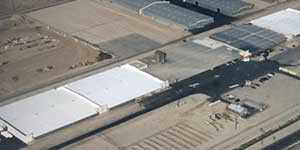
Yes, a single-ply membrane system is a practical and cost-effective roofing choice for most commercial buildings with flat or low-slope roofs. These systems use one layer of flexible synthetic material — typically TPO, PVC, or EPDM — to create a continuous waterproof barrier across the roof surface.
Commercial property owners across California choose single-ply membranes for warehouses, retail centers, office buildings, and multi-family properties. The appeal comes down to reasonable material costs, faster installation than built-up alternatives, and reflective surfaces that can reduce cooling loads during hot months.
That said, the performance of any membrane roof depends heavily on the specifics: the type of membrane selected, the attachment method used, and the quality of the installation itself. Below, Specialty Roofing of CA breaks down how these systems hold up in real commercial applications and what to consider before committing to one.
Key Takeaways
- Single-ply membranes provide reliable waterproofing for flat and low-slope commercial roofs at a moderate cost.
- Material choice and weather exposure directly affect how long the membrane lasts.
- Proper installation and routine inspections determine whether the roof reaches its expected service life.
How Single-Ply Roofing Performs on Commercial Properties
Single-ply membranes protect low-slope commercial roofs with one continuous layer of synthetic material, sealed at the seams to block water intrusion. Performance varies by membrane chemistry, attachment method, and the demands placed on the building below.
Primary Membrane Types and Their Differences
Three membranes dominate the commercial market, and each behaves differently once installed.
| Membrane | Category | Typical Thickness | Seam Method | Common Lifespan |
|---|---|---|---|---|
| TPO | Thermoplastic | 45–80 mil | Hot-air welded | 20–30 years |
| PVC | Thermoplastic | 50–80 mil | Hot-air welded | 20–30 years |
| EPDM | Thermoset (synthetic rubber) | 45–90 mil | Adhesive tape or liquid adhesive | 25–30 years |
TPO sheets come in white and reflect sunlight, which suits buildings with heavy cooling loads.
PVC contains plasticizers that give it resistance to grease, oils, and chemical exhaust. That makes it the standard choice above kitchens and processing plants.
EPDM is a rubber membrane, usually black, with strong flexibility in cold conditions. It handles thermal movement well but absorbs more heat unless ordered in a white formulation.
Weather Resistance, Energy Efficiency, and Durability
Welded thermoplastic seams create a bond that is often stronger than the sheet itself, which matters during wind uplift events and sustained rainfall.
Reflective white membranes can lower rooftop surface temperatures substantially compared to dark surfaces, reducing the heat transferred into the building. Many TPO and PVC products carry ENERGY STAR or CRRC ratings, and some qualify for utility rebates in California.
Durability depends heavily on installation quality and attachment method:
- Fully adhered systems offer smooth appearance and good wind performance
- Mechanically attached systems install faster and cost less
- Ballasted systems use stone or pavers, limited to structures that can carry the added load
Punctures from foot traffic, dropped tools, or HVAC service work remain the most frequent cause of leaks. Walkway pads and scheduled inspections address that risk directly.
Common Commercial Applications
Single-ply works best where the roof is flat or low-slope and covers a large, mostly uninterrupted area.
Typical installations include:
- Warehouses and distribution centers — large square footage, fast installation
- Retail centers and strip malls — reflective membranes reduce cooling costs
- Restaurants and food processing facilities — PVC resists grease from exhaust fans
- Medical offices and schools — low-odor adhesives and quick installation limit disruption
- Apartment and mixed-use buildings — flat roof sections over parking or common areas
Buildings with dense rooftop equipment require careful flashing at every penetration, since curbs, pipes, and drains are where most single-ply failures begin.
Planning a Successful Membrane Roof Installation
A single-ply system performs best when the deck, slope, and insulation are evaluated before any material is ordered, and when the installation method matches the building’s exposure and use. Attachment choices, seam quality, and a basic maintenance routine determine whether the roof reaches its expected service life or fails early.
Building Conditions That Affect Suitability
Start with the roof deck. Metal, concrete, and wood decks each accept different fastening patterns, and a deteriorated deck must be repaired or replaced before a membrane goes down.
Slope matters as well. Single-ply membranes are designed for flat and low-slope roofs, generally under 2:12, with a minimum of ¼ inch per foot of drainage recommended to prevent standing water.
Other conditions worth checking:
- Existing layers — most codes allow no more than two roof coverings, so a tear-off may be required
- Rooftop equipment — HVAC units, vents, and skylights increase the number of flashing details
- Chemical exposure — grease and oil discharge from kitchen exhausts favors PVC over TPO or EPDM
- Wind zone — coastal or high-wind sites often need fully adhered rather than mechanically attached systems
Installation, Maintenance, and Expected Service Life
Three attachment methods dominate:
| Method | How It Works | Best Suited For |
|---|---|---|
| Mechanically fastened | Fasteners and plates through the membrane into the deck | Budget-conscious projects, larger roofs |
| Fully adhered | Bonding adhesive across the entire substrate | High-wind areas, irregular roof shapes |
| Ballasted | Loose-laid membrane held by stone or pavers | Structurally strong decks with minimal penetrations |
Seams are welded with hot air on TPO and PVC, or bonded with adhesive tape on EPDM. Weak seams are the most common source of leaks, which is why probe testing after welding is standard practice.
Plan on two inspections per year, plus a check after severe storms. Clear drains, remove debris, and repair punctures promptly.
With correct installation and routine upkeep, TPO typically lasts 15–25 years, PVC 20–30 years, and EPDM 20–30 years.
Working With Specialty Roofing of CA
Specialty Roofing of CA evaluates the deck, drainage, insulation value, and rooftop equipment layout before recommending a membrane type and attachment method. That assessment prevents specifying a system the building cannot support.
Ask any contractor for manufacturer certification on the specific membrane being installed — warranties on single-ply systems are usually void without it.
Expect a written scope that identifies the membrane thickness, typically 45, 60, or 80 mil, along with insulation R-value, flashing details, and warranty terms covering both material and labor.
Specialty Roofing of CA also handles inspection schedules and repairs after installation, which keeps warranty documentation intact and catches seam or flashing issues while they remain small.